“Cleaning up”: inside Dortmund’s zero tolerance approach to rough sleeping
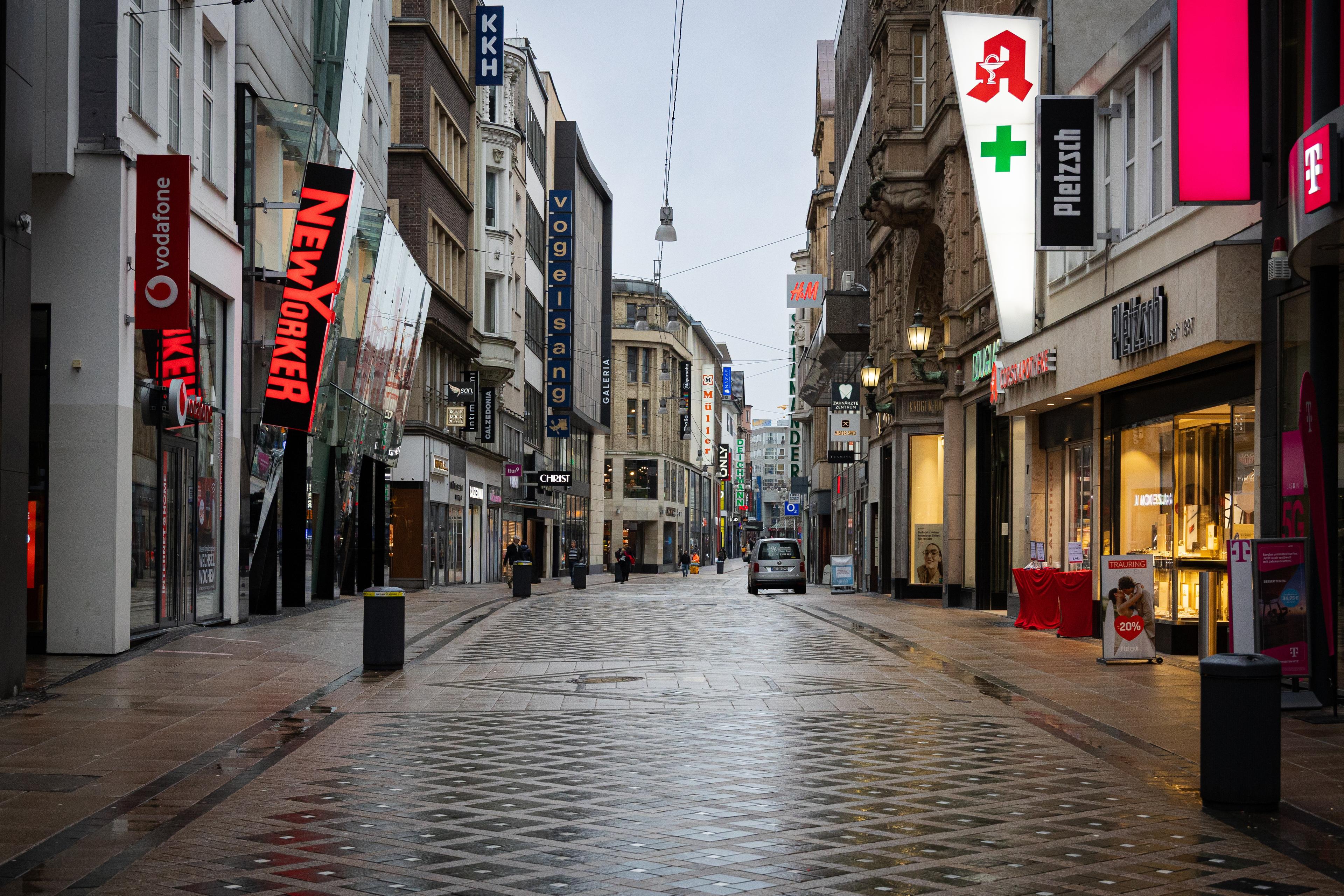

Photo by Sebastian Sellhorst
By Bastian Pütter
- News


When you talk to people experiencing homelessness in Dortmund city centre, the conversation quickly turns to the increased presence of the municipal public order service (KOD). The employees of the public order office, equipped with stab-proof vests and batons, are hardly distinguishable from the police. “The goal is stress,” says Carsten, who has been living on the streets for four years. He pats the sleeping mat dangling from his backpack. “It’s to stress us out. Here’s a warning, an expulsion, go somewhere else!”
The general situation in Dortmund hardly differs from that of other major cities: the high street business model is in deep crisis. Instead of crowds of visitors, social problems dominate high streets. High poverty rates, the consequences of the Covid-19 pandemic and a lack of housing have led to a homelessness crisis. Prevention is ineffective; hundreds of evictions exacerbate the problem. For some users, crack cocaine use leads to neglect and intense cravings, which manifest as so-called “aggressive” begging.Driven by the city centre retail sector, Dortmund has already reacted with repression in recent years. The instruments: a morning wake-up service that issues eviction orders for people sleeping in the city centre, as well as a variety of fines and penalties.
Expulsion as aid?
The new mayor is increasing efforts and accompanying the crackdown with a PR offensive. Just one week after taking office, Alexander Kalouti visited the KOD during a multi-day “focus operation” and had the city’s social media team document the tour. At the end of the week, 211 people were ordered to leave the premises, 175 administrative offenses were reported, and 81 people experiencing homelessness were evicted for “illegal camping in public spaces”, most without but 12 with a fine.
In February, the Ruhr Nachrichten were “embedded” in such a tour. The head of public order and the mayor give the impression that the massive deployment of uniformed and civilian forces is solely about “helping and admonishing the homeless and addicted,” as the later headline of the report states.
The police chief had established this narrative when the mayor took office. At the end of October, Gregor Lange presented a zero-tolerance approach, the aim of which was to make “the stay in public space as uncomfortable as possible for people who are homeless, addicted to drugs and otherwise in need of help.” The goal: to “push those affected into counselling and support services”.
Despite criticism from homelessness services as unrealistic and unprofessional, the city sticks to this narrative. Employees of the public order office demonstrate to the Ruhr Nachrichten how, along with orders to leave the premises, addresses of aid organisations – which are already known to all those affected – are also distributed. The head of the public order department frames the expulsions as a highly efficient aid programme: “We can’t reach everyone. But if we make it to 80 percent, that’s a good result.”
Begging and “camping”
On the street, however, there is a growing impression of a deliberate displacement from the city. Max has been homeless for two and a half years. His sleeping place is near the train station, and during the day he stays in the city centre. “Right now, I’m collecting fines,” he says. “I’ve been approached at least 10 times in the last few days. You really feel like the lowest of the low.” Just now, they added a €15 fine for a discarded cigarette butt. “Everyone does it, but they don’t say anything about it.”
Then he adds quietly: “The homeless are already at rock bottom. I couldn’t sleep soundly in their shoes.”
Karim, who begs in the city centre, has also received several fines recently. Begging itself cannot be prohibited, but anyone who approaches passers-by, even while sitting, will be prosecuted for so-called “aggressive” begging. “A couple in civilian clothes, ordinary people, came along and smiled at me as they walked by. I politely asked for some change and immediately received a fine.”
Karim is certain that “this form of control did not exist before. This is new.” Grimly, he adds: “I scrounged the money for the fines and paid it to the city – I have no debts.”
As with “aggressive” begging, the boundaries are being pushed further and further when it comes to punishing visible homelessness. The basis is § 7 of the city’s regulatory ordinance, which prohibits storing, camping and overnight stays in public spaces.
“These days, it’s enough to just look homeless,” says Martha, who lives on the street. “The public order office is much worse than the police. They always find something: if you have a sleeping bag with you, it’s considered ‘camping’.” However, anyone who leaves their belongings unattended in the city centre must expect that survival aids such as sleeping bags and personal items will be disposed of without hesitation.
Martha also has the impression that there is a selective approach being taken. “Foreigners who do not speak German are particularly affected,” she says. “Poles and Ukrainians will receive immediate ejections and penalties. A friend of mine is Ukrainian and doesn’t have an ID card. He constantly has problems and has to pay fines for sleeping outside, even though it is claimed that such fines do not exist. If we don’t clear the space quickly enough, they’ll push us.”
Inside homelessness services, it is clear to see how the fronts are hardening, how stress and despair are growing among those affected. Sleeping places are shifting to the surrounding residential areas, and street workers are finding it increasingly difficult to reach clients. Nevertheless, people experiencing homelessness depend on the infrastructure, assistance and opportunities to earn money in the city centre.
“There are reasons why I’m here and not in the house by the lake,” says Carsten. “They could have asked us beforehand. Then we would have said that driving away everyone who doesn’t suit you won’t work.”