How ICE deportations are impacting people experiencing homelessness in DC
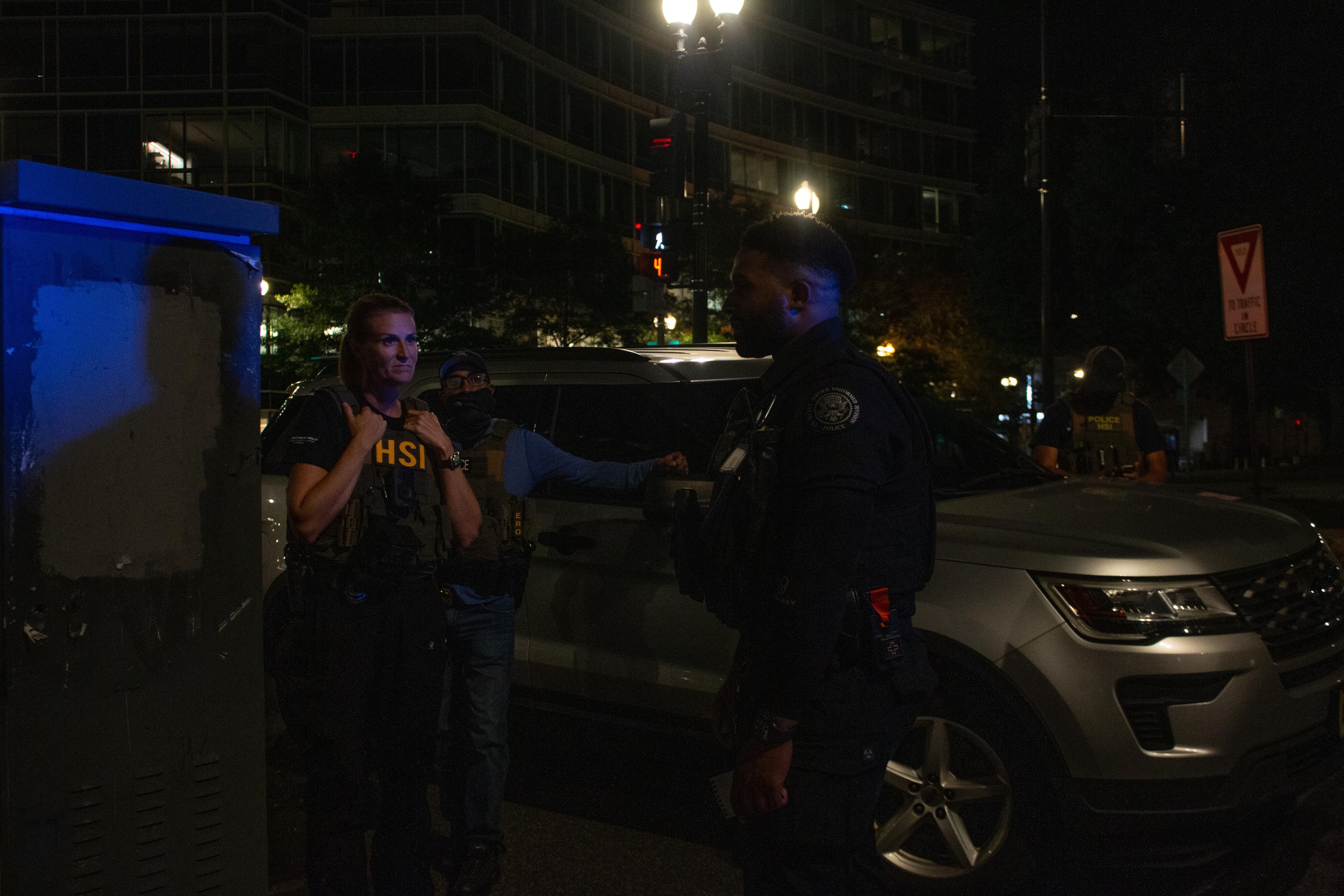

Photo by Madi Koesler
By Katie Doran and Annemarie Cuccia
- News


Last summer, a DC resident was looking for apartments to rent with his newly received housing voucher. The man, who Street Sense is not identifying to protect his family’s privacy and the outreach organization that he worked with, was born in El Salvador. His parents brought him to the US more than 20 years ago, when he was eight. After years in the homelessness services system, the man was just a few weeks away from having permanent housing, according to a homeless services outreach director who worked with him. Then came the federal takeover of DC.
In August, Immigration and Customs Enforcement (ICE) deported the man, the outreach director said. Last month, someone murdered him in El Salvador.
“The deportation and the murder are both, obviously, very shocking,” the outreach director said. “It goes to show the very real human and life costs that deportations—that ICE—are having on all these individuals and all these communities.”
The director asked not to be named to protect her organization and its clients from retaliation from ICE. Her client, who was killed in El Salvador, is only one of dozens of people experiencing homelessness or housing insecurity in the District who have been impacted by ICE deportations since the summer.
ICE arrests in DC spiked at about 30 per day during the federal takeover in August, and remained high through the following weeks. The data, taken from the Deportation Data Project, is only available through mid-October. The group gets its numbers through Freedom of Information Act requests to ICE, which has not updated its public dashboard on deportations since Trump took office.
There is no comprehensive list of people experiencing homelessness who have been deported or targeted by ICE. But since the takeover, deportations and ICE presence around DC, especially near places that provide services, have deepened fear among people experiencing homelessness and housing insecurity and disrupted access to outreach services.
Deportations
Chewy, an undocumented immigrant in DC who asked not to be identified by his real name to protect himself from being targeted by ICE, recently moved into housing through a housing voucher. (While federal housing programs often require people to be citizens, locally funded programs offer vouchers to DC residents who are non-citizens.) Chewy said that many of the friends whom he experienced homelessness with were deported.
“Most of them, people I used to hang with when I was homeless, most of them got deported already,” Chewy said. “My reaction is just like, ‘Wow,’ you know? These are people. These were close friends.”
It is unclear whether ICE has intentionally targeted people experiencing homelessness in the city. In January, Ward 1 Councilmember Brianne Nadeau issued a report about the impact of the federal takeover, arguing that DC police lost trust by collaborating with ICE. The report, which came after a public roundtable last fall, did not identify impacts of ICE on people experiencing homelessness.
“We did not hear at the hearing, and I’ve not heard reports from others—that immigration enforcement has been targeting people who are homeless,” Nadeau wrote to Street Sense in an email.
But due to time spent in public spaces, people experiencing homelessness can be especially at risk of being detained by ICE, according to Deepa Bijpuria, a supervising attorney at Legal Aid DC.
“ICE has arrested people based solely on their race, language, or other perceived sign of immigration status. When simply being visible is a risk, people who spend much of their time on the streets are extremely vulnerable,” Bijpuria wrote in an email to Street Sense.
Homelessness outreach workers also told Street Sense that they have seen clients in various living situations—from sleeping outside to receiving permanent housing—be deported.
The homelessness outreach director said that at least six clients at her organization were deported after going through the process to receive permanent, government-sponsored housing in DC, which typically takes at least two years. That process is “not easy, regardless of documentation status,” she said. “It’s heartbreaking. A lot of these folks have fought tirelessly to get through the system and everything the ‘right way,’ and then are still being deported.”
Sometimes, a person’s loved ones only find out that ICE has arrested or deported them through social media posts, community group chats, or news posts. One outreach worker said that he found out that a client had been deported because ICE posted a Facebook video of the person being handcuffed and put in a car.
“For the community at large, for people’s friends and families to find out about these deportations through online videos that circulate—it's just really awful,” the homelessness outreach director said.
When someone is deported, their loved ones and communities in the US often have to live with the uncertainty of not knowing what happened to them. In some cases, the director has been able to connect with people who have been deported or their families to “confirm that they’re alive, at the very least,” she said. “But for just as many others, I have no idea what happened to them, if they’re okay, if they’re alive, anything.”
ICE activity around shelters and service centers
In Chicago, New York City, and other cities, ICE has targeted people experiencing homelessness by patrolling outside of or entering shelters. In DC, some outreach workers and shelter residents told Street Sense that they noticed heightened ICE or National Guard presence near shelters and homelessness service providers, especially during the federal takeover.
“When the operation was first rolling out, [ICE and other federal officers] weren’t going inside, but they were definitely hanging out outside of places that they knew people were frequenting,” the outreach director said.
This fall, ICE also detained several people living in the New York Avenue Men’s Shelter in the blocks around the shelter, residents told Street Sense. Some were detained when they went to look for work at the nearby Home Depot, residents said, which was a hotspot for immigration agents.
“These guys were working, you know what I mean?” Gerald, a New York Avenue shelter resident, said about those who were detained. Gerald and other shelter residents estimated that between August and November, dozens of residents—upwards of 40—were detained by ICE or did not return to the shelter after immigration enforcement activity in the area.
While a few New York Avenue residents claimed that they had seen ICE agents enter the shelter itself, others said that agents did not go inside, but were sometimes around the building, or in the alley behind it. DC’s Department of Human Services (DHS), which oversees shelters, and the mayor’s office both declined to comment on this story, including on questions about whether ICE has entered shelters or been stationed near them.
Nationally, ICE agents may not enter private spaces, including private or restricted areas in shelters or service centers, without a search warrant or consent to enter.
In DC, DHS guidance that was available online until this month instructed workers to ask for warrants if ICE came to a shelter or service center. If an ICE agent entered the facility without a warrant, workers were told to document the incident. The guidance directed workers to “never confront or stop an ICE agent.”
This guidance was publicly available from at least 2022 to mid-February; when asked to confirm whether the document was still up to date, a DHS spokesperson declined to comment. The guidance document has since been taken down.
Fear around ICE activity
ICE activity has created an “environment of fear” in the District, Bijpuria from Legal Aid DC wrote in her email. “People are having to make impossible calculations about whether to seek benefits and potentially become a target.”
Fear of being targeted by ICE affects not only those who are undocumented, but also many Latino people and immigrants with legal status. The homelessness outreach director said that she has clients—including two experiencing homelessness—who are in the US legally but have been detained by ICE multiple times, sometimes for up to a few days.
The anxiety around ICE presence in the District can discourage immigrants and Latino people experiencing homelessness or housing insecurity from seeking resources and services.
“Folks are scared, even to go to service centers, to access housing, to access health insurance, because they fear that this puts them at risk,” said Sierra Barnedo, program manager of rapid rehousing and Latinx street outreach at SMYAL, a youth homelessness service provider. “Services that we had were already hard to navigate for people who didn’t speak English.”
Those without housing may fear being targeted by ICE while living in shelters or outside but also face similar fears about encountering ICE during the lengthy process of trying to access housing. That process involves meeting with case managers or, sometimes, reporting to different government offices.
Those with housing, like Chewy, can feel discouraged from accessing other essential services. “I really don’t go out much if I don’t have to, but sometimes [if] I have to go to a doctor’s appointment, I have to watch out for ICE and stuff, or I have to go to the store. And it’s scary,” he said.
Outreach workers told Street Sense that ICE activity has forced their organizations to be much less public about the work that they do, particularly around gatherings and events that could put their clients at risk.
“[ICE] has altered the way that we work, maybe even permanently,” one outreach worker said, adding that his organization no longer publicly shares information about its events, including those that may provide food, cold weather gear, or other essentials. “We don't publish anything … to the general public anymore at all.”
Barnedo said that SMYAL has increased efforts to offer transportation assistance to events to help clients to feel safer attending. She also emphasized the importance of outreach organizations having Spanish-speaking staff.
“Now more than ever, we need Spanish-speaking case managers,” Barnedo said. “The type of case management and cultural competency that’s required to work with these populations is not something that, honestly, most folks have, who work in the system.”
While outreach workers agreed on the need for more bilingual services, they also said that outreach organizations can only do so much to mitigate the impact of ICE and the fear surrounding it.
“This is just completely an operation that’s meant to harm and scare people,” the homeless outreach director said. “The impact on not only my clients, but the community at large, is unfathomable.”