Megaphone and L’Itinéraire: the same story from one end of Canada to the other
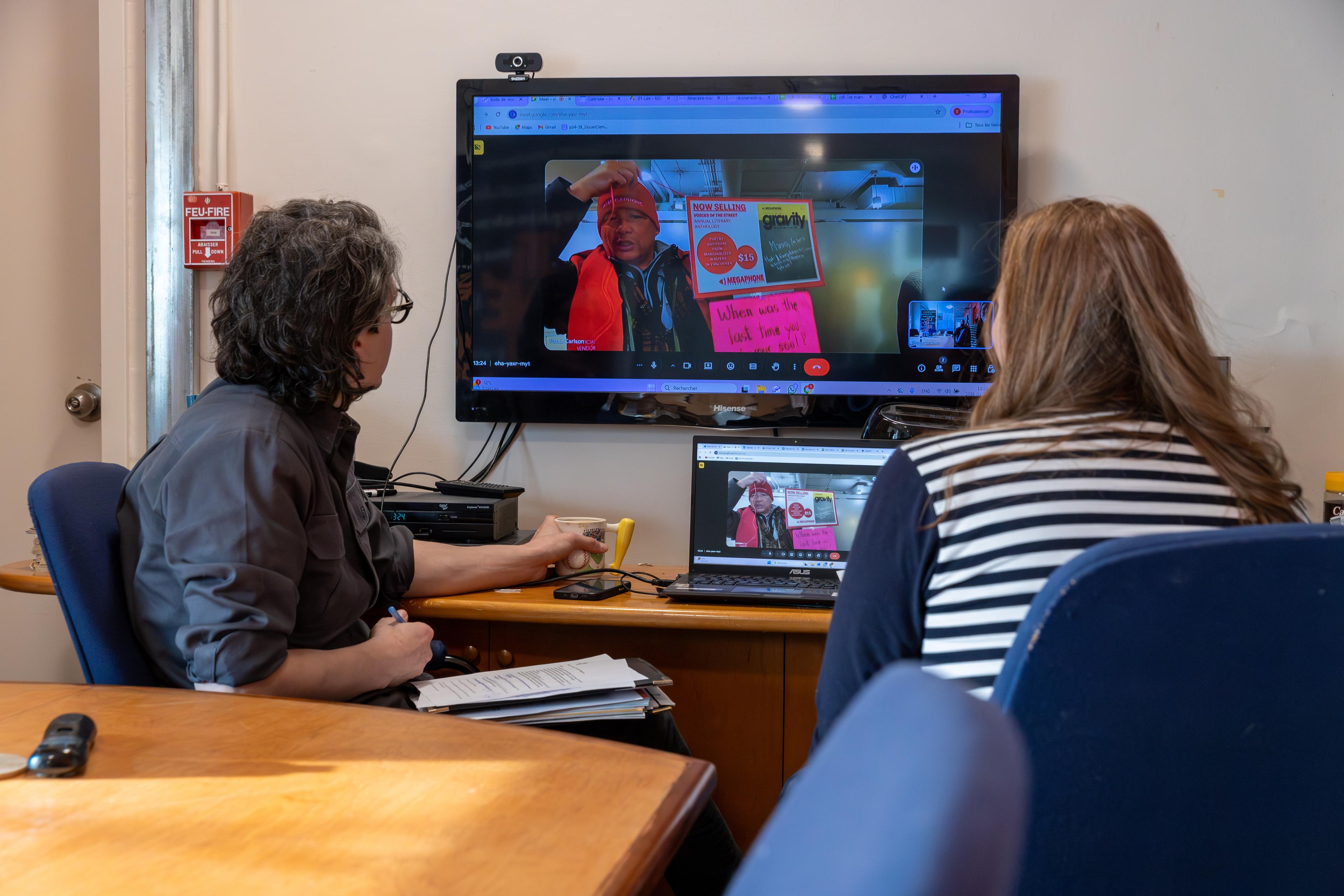

Photo by Gabriel Lavoie
By Simon Bolduc
- Vendor stories


Every month, 135 vendors roam the streets of downtown Vancouver, Canada to sell Megaphone magazine. Among them, David Deocera stands out. A star vendor, he sells - come rain or shine - in the impoverished Downtown Eastside, behind a colorful stand where his magazines sit alongside cardboard signs covered in catchy slogans.
Lynn Champagne, a vendor for L’Itinéraire, based in Montreal, had a few questions for him. The two met via video call and discussed their backgrounds, sales techniques, and shared desire to one day join the workforce.
The discussion opens with an unexpected image as David holds up a copy of L’Itinéraire to the camera. “How did you get your hands on that?” Lynn asks.
“No idea,” he replies, laughing, “but since I’ve had it, I display it on my stand. Visitors from Montreal are delighted to recognize a product from back home.”
Lynn: Tell me, David, have you been selling Megaphone for a long time?
David: Eight years, and I’m starting my ninth.
Lynn: It’s the same for me! Can you tell me a bit more about yourself and your journey? What led you to become a vendor?
David: I left the Philippines for Canada in 1995. I’m happy and, above all, proud to have successfully settled in Vancouver. I started my life here working a series of jobs: night janitor at a ski resort, dishwasher, and security guard during the 2010 Olympics.
After the Games, work was harder to find. I started distributing dailies and free newspapers, which gave me experience as a street vendor. But these newspapers closed down.
My community, my sense of belonging, has always been in the Downtown Eastside. I regularly saw people selling Megaphone on the street. I was curious. I read it and fell in love with the content. I care deeply about social justice, and I love the fact that a street newspaper acts as a spokesperson for marginalized people.
Lynn: Does it allow you to have a better quality of life?
David: Megaphone saved my life. While staying in neighborhood shelters, I met all kinds of people; I ended up drinking and partying in dark bars. It’s not bad in itself, but I frequented those places, along with some narcotics, because of pressure from my circle of friends.
Megaphone gave me many skills. I manage my work as a vendor like my own small business. I do inventory, planning, marketing strategies, customer service and time management. It’s my little shop.
Lynn: Do you have the opportunity to write or get involved in the design of the magazine?
David: I’m part of The Shift Peer Newsroom program. It’s an editorial committee led by a group of vendors. Also, I’m a visual artist, and Megaphone publishes my work occasionally.
Lynn: I do crochet, and sometimes I crochet roses. I give them to people around me, to customers, and to members of L’Itinéraire.
David: Vendors of Megaphone also sell a book of poetry and a calendar featuring portraits of the vendors.
Lynn: Oh really? Does it sell well?
David: Yes, the calendars are sort of our flagship product. Everyone wants one! For the poetry book, I made a sign that reads: “When was the last time you fed your soul? Poetry book, $15.00.” I make the monthly magazine and special issues visible on the street to catch the attention of passersby.
It’s hard to sell something, especially on the street. People are too busy; they pass by quickly. So it’s a good strategy to grab their attention a bit, as long as it’s done legally and respectfully.
Lynn: That’s my philosophy too. I wanted to ask if you have problems with people panhandling [begging] where you sell?
David: When I see panhandlers on my corner, I try to be respectful and move further away. Sometimes I buy them coffee or candy. I try to maintain good relations with them, especially those I’m familiar with.
Lynn: Just like me. There’s one person at my spot, and I tend to bring cigarettes or slip a dollar or two. We try to find arrangements.
David: And I talk to them a bit about Megaphone. I tell them they can become vendors if they want. I give them the address and phone number and invite them to come and tell their story.
Lynn: Are store owners generally open to having a vendor in front of their business?
David: I try not to stay directly at the entrance of a business. If there’s a vacant space next door, I set up there. Often, I’m on the sidewalk at the corners of two major downtown streets because there’s a lot of traffic coming from different directions.
Lynn: Here in Montreal, vendors are authorized to sell in different locations, depending on agreements, like grocery stores, pharmacies, and metro stations. Is it the same in Vancouver?
David: We have a license from the City of Vancouver that allows us to sell almost anywhere. But in the SkyTrain [metro], for example, I stay outside because I find it more respectful.
Lynn: Here, the weather is a real problem. Right now, it’s −25°C, so we’re happy to be able to sell inside the stations.
David: Here, it’s the rain. When it rains hard, I try to stay under the awnings of vacant businesses.
Lynn: Does Megaphone offer support services to help vendors find a job or move on to something else?
David: We are continually offered various opportunities: training, experiences, workshops. For example, I received first aid training and attended a food safety workshop. They also provide letters of recommendation. I’m still looking for a job, even at 60.
Lynn: We don’t really have a choice at that age but to keep working today, right?
David: From time to time, I go to employment centers and send out my resume. I can count on Megaphone as a safety net.
Lynn: Your magazine sells for $5. How long has it been at that price?
David: For a year. We went from $2 to $5.
Lynn: Did people stop buying it because the increase was fast and significant?
David: Only a few people reacted negatively, but the majority agreed with it.
Lynn: How much do you pay per copy?
David: We buy them for $1.50. My goal now is to reach more people because I notice there are still many who don’t know the magazine. I’m trying to tell the public about our YouTube channel, for instance, so they can watch our video content. That’s my current strategy.
Lynn: Well, thank you very much, David. It was a pleasure to meet you. You should take up crochet! It’s a good niche, I promise you. It’ll sell!
The Shift Peer Newsroom: a guarantee of journalistic quality
“What if we created a newsroom led by vendors and rooted in the Downtown Eastside?”
This idea, launched by Megaphone Editor-in-Chief Paula Carlson within her small team, took shape in 2023 when the organization obtained funding to set up this pilot project for journalistic training.
The program brings together 14 vendors who meet once per month in the magazine’s newsroom to decide on the content of the next issue and the distribution of tasks. Following these meetings, some go on journalistic assignments, others brainstorm the cover, while some - like David - dedicate themselves to visual creation.
A professional journalist accompanies the vendors in their mandates and ensures, alongside them, rigor, fact-checking and the quality of information.
The majority of vendors sitting on this monthly editorial committee have also benefited from journalism training through a partnership with Langara College in Vancouver.