Dangers on the streets: an arson attack and its consequences
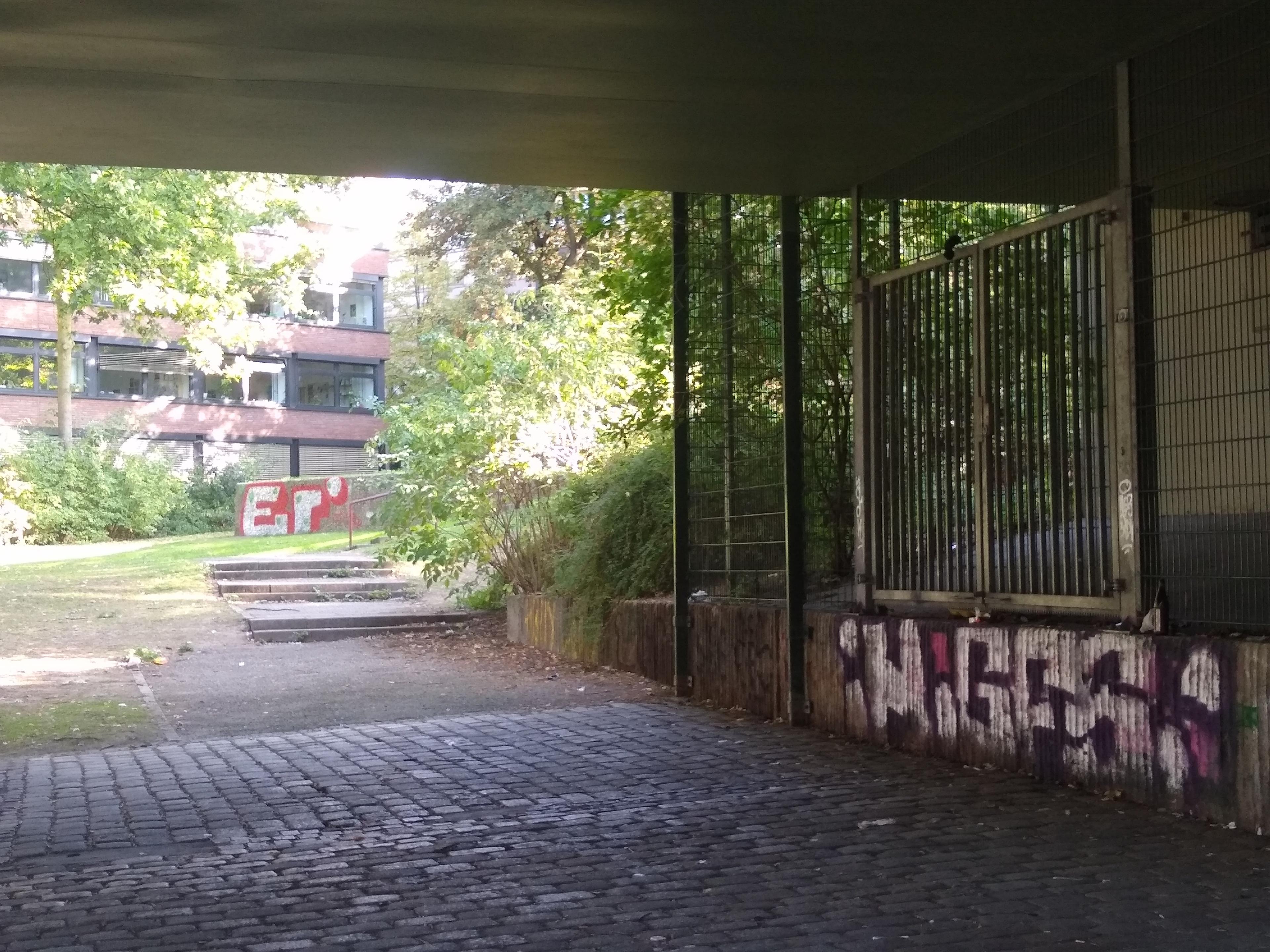

Photoy Janita-Marja Juvonen
By Janita-Marja Juvonen
- Lived experience


On 18 January 2001, nine days after my 21st birthday, the wooden shack in which I was sleeping was set alight. For 20 years, I found it difficult to talk about what had happened. During my city tours and other events, I mentioned it only briefly, if at all, with the sentence: “I was set on fire, but that’s all I can say about it.”
It was only in 2021 that I gradually began to come to terms with this difficult memory. I found ways of expressing my experiences through painting. I slowly began to talk about it more and more openly in private.
Of course, everyone experiences such attacks on their life differently, but in every case, the following applies: it is never that “nothing” happened. Even if someone escapes with their life or doesn’t suffer any serious physical injuries, every person reacts differently to traumatic experiences, and those experiences leave behind deep scars, at least internally.
On that day, when another person deliberately tried to kill me, it broke something inside me. And it is beyond repair. That’s why I buried the experience deep inside of me. It is incredibly difficult to continue living normally, insofar as we can even speak of normality in the context of homelessness. It suddenly becomes clear: there are people who want to kill us!
We were under “my” bridge when the door to my wooden shack was set on fire and someone outside shouted, “You all must die!” I have absolutely no memory of what happened earlier that day. My experience begins with this sentence and the inferno in the wooden shack. The door went up in flames so quickly – so quickly that it was impossible to grasp the life-threatening situation. The rest of my “living room”, my supposedly protected retreat, followed in what felt like seconds.
I jumped through the burning door as I no longer had any other way to escape. I couldn’t see whether the perpetrator was still waiting outside. A few centimetres from the door, the ledge on which we were sleeping ended and the ground dropped away by about a metre. I was used to jumping from this ledge, but I had never before been forced to do it blindly.
Pure luck ensured that I didn’t injure myself jumping. I ran to the street and to the police, who had already arrived. Running towards the street, the bridge a sea of flames, the wooden shack, which I had been lying in seconds before, was fiercely ablaze behind me, along with all my worldly belongings. This scene is seared into my memory with the fire.
At that time, as so often during my homelessness, I reacted with very dark humour. When asked if anything had happened to me, I told the policeman, “Shit, I don’t have home contents insurance!” This way of dealing with it protected me from reality, and not just on that day. Today, I know that I was in shock.
The policeman was horrified when he learnt that I had been in the shack when it was set on fire and that the perpetrator knew this. He seemed helpless. What else could he do? Calling my family to take me home was out of the question. Take me home himself in his patrol car? At that point, all that was left of my home around the corner was ashes. But I remember him being very friendly. Friendly, but clearly overwhelmed in dealing with me.
More and more people came: the fire brigade, ambulance service and even more police. It was a cacophony of sirens and flashing blue lights, plus the smell of smoke hanging in the air. It must have been insanely loud. But to this day, I remember only that these scenes took place in absolute silence for me. I perceived everything as if through cotton wool or a very dense fog.
The sea of flames is still in my mind to this day. The flames were surging up the bridge and brought all the traffic up above to a standstill. At some point, I realised that everything I owned was on fire: the few letters from my mother, photos. It clearly showed me what this attack was intended to achieve. It was only much later that I realised the extent of it.
The perpetrator then returned and was arrested. He was later charged for property damage, amount in dispute around €22,000.
I just had to get away from the fire, from the stench. I had to get money to numb my body. I absolutely could not let myself think about what happened. I functioned as if in a trance. I went off and obtained my “coping mechanism”, heroin. I was just surviving, like I always did on the street: switching off feelings and sensations of pain. I turned myself off and disconnected.
There was no support in the form of therapy; I just tried to get on with my life. Today, people ask me why the emergency services didn’t look after me. They should have seen that I was in shock and needed to be looked after, physically as well as mentally: after all, I had inhaled smoke. I don’t have an answer to that. Apparently, nobody realised that I was the person from the wooden shack.
I don’t want to blame anybody. They didn’t know any better. I communicated this immediately and had also called the emergency services myself. They should have noticed that I was obviously in shock. After all, they were the experts. Or did they notice, but not consider it important to provide me with medical care? I don’t want to allow that thought to enter my mind, either. Rationally, I know that I haven’t done anything wrong, but this question keeps coming back to me.
Because I didn’t receive care or therapy afterwards, I developed complex post-traumatic stress disorder. There was also shame and guilt. One consequence of the attack continues to this day: I only sleep facing the door. I never close the doors in flats where I’m alone. In unfamiliar rooms, I sleep very restlessly and for very short periods, or not at all.
What I ask myself today as a result of this experience is this: How can we treat people in such extreme situations better? People who cannot be brought home, into their own safe home. Those who are not picked up by relatives and supported at least to some extent. The people who don’t go to therapy. Even people with structured lives can no longer get therapy without eternal waiting times.
Perhaps so-called peers could be used here: people with their own experience of illness and therapy. They could support and advise other sufferers as “experts through experience”. Social workers frequently didn’t stand a chance with me: my trust in institutions and the people who were supposed to be there to help me was long lost.
My trust in the emergency services has also been severely damaged: even when they want to help, they are often unable to do so. I am of the opinion that professionals need to be better trained in dealing with people experiencing homelessness so that they don’t just leave people to their own devices in such situations, or, as in my case, fail to recognise a state of shock.
In general, the longer that people live on the street, the more distrustful they become. I have experienced several life-threatening assaults and not been treated well by the support system: I’ve been thrown out of hospitals or woken up after surgery in the basement or the storeroom. Being abandoned by police officers at night in small-town industrial areas, without shoes, is not from a terrible made-up fairytale, but rather my bitter reality.
For years, people have shown me and told me that I don’t belong to society. That I am an undesirable. And more and more people who are pushed out of the centre of society are paying a high price – often with their lives.
The most effective safeguard against violence is having your own home. If it is not possible to provide immediate shelter for everyone, then we should at least offer them visibility and protection, treat them humanely, and ensure that they at least survive the worst time of their lives.