From children’s homes to homelessness services in Hungary: a possible path
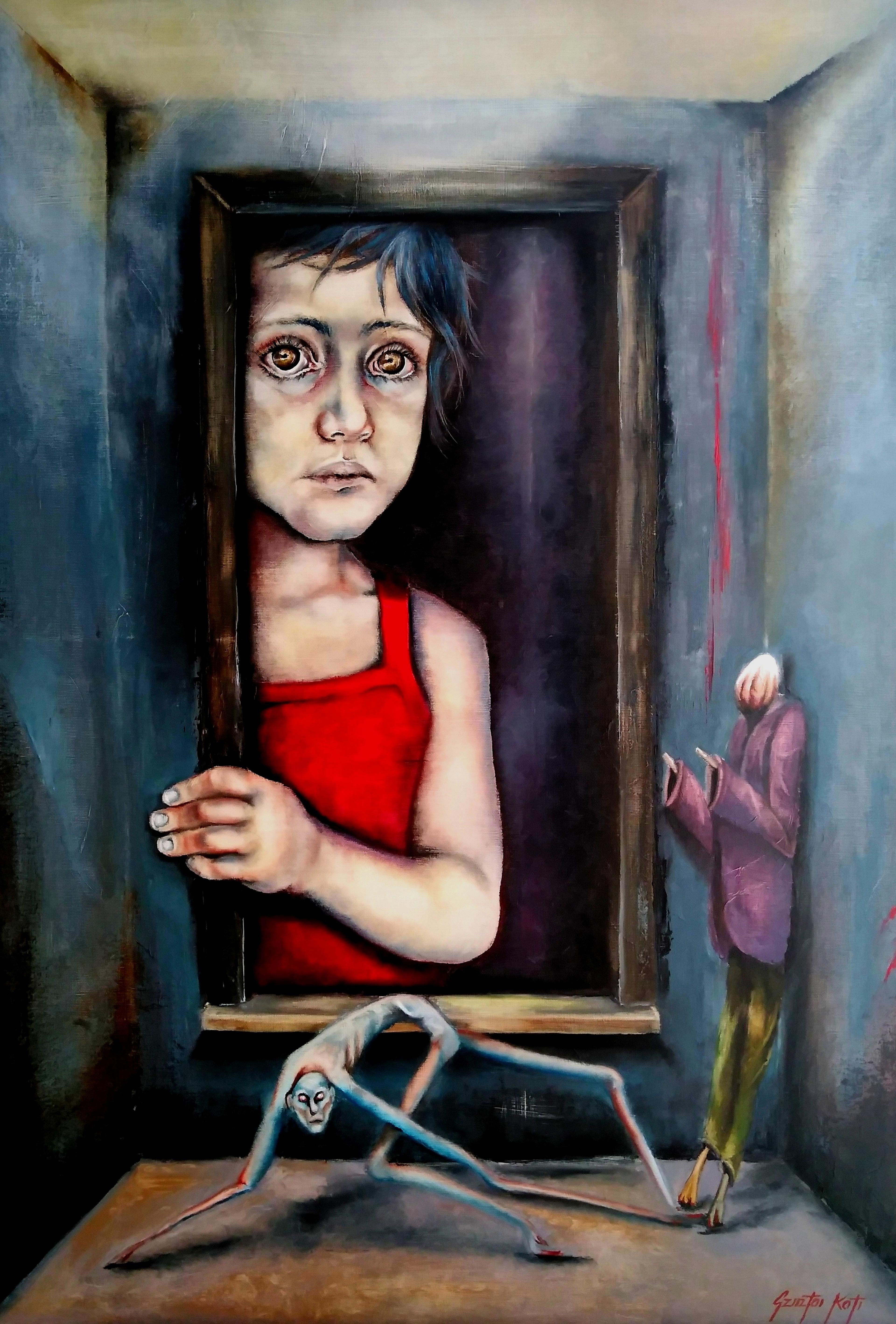

Illustration: Katalin Szintai – Night in the Dollhouse. This image was created with the support of the Erasmus+ programme, within the framework of the project Let’s Talk about Homelessness, as part of the LookTalkAct campaign.
By Katalin Gyöngyösi
- Lived experience


Hungary’s child protection system received unprecedented public attention in February 2024, when news broke about a presidential decision to grant clemency to a former employee of a state-run children’s home, convicted for covering up sexual abuse by his superior.
Mass protest followed, leading to the resignation of the president of the Republic and the minister of law, and a counsellor of the president – former minister of human resources and pastor, who allegedly supported the clemency decision – also resigned from his position of synodic president of the Hungarian Reformed Church.
Afterwards, new legislation was adopted ruling out the option of clemency in child sexual abuse cases, and new mandatory screening procedures were introduced for child protection employees. Next year, public shock was all the greater when, in May 2025, the director of a correctional institution for minors and his colleague (and girlfriend) were arrested with the charge of abuse of power, prostitution and human trafficking of minors and young people raised in child protection facilities.
These cases became material for heated political debate. At the same time, they turned the spotlight on further longstanding issues within the national child protection system, reaching beyond specific institutions or leaders.
Structural problems had already been voiced by professionals from the field and backed up by research for years. Hungary is one of the post-Soviet countries where the foundations of the current child protection system were laid after the political changes at the end of the 20th century.
According to the Act 31 of 1997 on the protection of children and guardianship, the protection of children is legally defined in Hungary as an activity “aimed at promoting the upbringing of the child in the family, preventing and eliminating the child’s risk, and providing substitute protection for the child who is left in the care of parents or other relatives”.
This is ensured, on one hand, by basic child welfare services (involving monetary, in-kind and personal care, e.g. a regular child protection discount and daycare for children). On the other, there are specialised child protection services, including care in the home (by foster parents or in various categories of children’s homes), aftercare for youth beyond 18, regional child protection specialist services, and the correctional care of juveniles placed in detention, or referred to correctional institutions by court decision.
The Hungarian child protection system underwent considerable changes over recent decades. Former large children’s homes have been dismantled, and the share of children raised by foster parents instead of institutions increased. In 2024, approximately 24,000 children and youth received child protection provision in Hungary, including young people aged 18 and over receiving aftercare.
According to data, study results and reports from several organisations working the field, the number of staff in the system, especially that of highly qualified professionals, is inadequate, and working conditions are often challenging, with reports of much overwork and low wages. This contributes to the high turnover of employees working in child protection institutions, making it difficult for children to build solid, secure relationships with adults caring for them.
Professional services supporting traumatised children and youth entering the system are often missing. The number of available foster parents is insufficient for placing older children in family settings, especially for those with special education needs or substance use problems, while spending years in children’s homes easily leads to institutionalisation and loss of opportunities to prepare for independent life.
Transfers between placements and escapes are frequent, indicating a mismatch between children’s needs and the services offered. Children and youth receiving child protection provision face an increased risk of early substance use and committing or becoming victim of misdemeanours, crimes, prostitution and human trafficking before reaching adulthood.
The national child protection system has also been criticised for its apparent ineffectiveness in preventing children’s removal from their original families through child welfare service provision, and for the grounds of child placement decisions in many cases.
A 2017 investigation of the ombudsman for fundamental rights found that every third child placed in the specialised child protection system had been removed from their families due to the family’s poverty, even though removing children from their families solely based on their family’s socio-economic status is forbidden formally by the Act on Child Protection.
While data on the ethnic background of children is not collected anymore in the child protection system, studies from the early 21st century and earlier indicate a lasting overrepresentation of Roma children in the child protection system.
This suggests that placement decisions particularly hit the Roma people of Hungary, among whom socio-economic disadvantage is highly prevalent and multi-generational poverty is often present, and who experience widespread discrimination in the Hungarian society.
Research on children and youth place in the system over decades has evidenced an accumulation of disadvantages among children living in child protection care. Children in the child protection system are much more likely to be classified as having special educational needs, and children with a Roma background children are strongly overrepresented.
In terms of school performance and educational attainment, children placed in child protection care lag behind peers of their age raised in families, and they reach lower overall qualifications by the time that they are about to leave the child protection system.
Departure time comes at age 18 for those not pursuing their studies afterwards and not awaiting specialised placement due to their circumstances such as disability, while those still studying full-time can stay a couple of years more in aftercare facilities.
Upon leaving the system, a one-time home-building support payment (the amount of which depends on the child’s length of stay in the child protection system) is available to aid the first steps of young people’s new independent lives.
Experience shows that with housing prices rising considerably and a steady shortage of public housing supply in cities, starting and maintaining a new home individually using only financial support received upon leaving the child protection system is very difficult, or even impossible, in urban areas where employment options are available.
Research on youth receiving aftercare services also suggest shortcomings in the conditions for preparing young people for leaving care and starting an independent life, especially as most aftercare settings are very similar to children’s homes, or are provided in the same location, not allowing for practicing skills for independent living.
Once aftercare runs off, people raised in the child protection system are not entitled to further targeted support in kind, in cash, or through personal service provision. It can be expected that creating and maintaining an independent life can easily become a challenge in the face of low educational attainment, lack of family support, past trauma and social prejudice, and that those leaving care may later become service users of the social welfare system.
This is a phenomenon observed in a particular segment of the Hungarian welfare system targeting one of the most vulnerable group of adults: people experiencing homelessness.
An internal survey series of the Hungarian homelessness services system, the “February 3rd” study (named after the date of annual data collection in early February), has provided the most extensive data on homelessness in Hungary since the late 1990s. This survey has been carried out annually in February among the clients of homelessness street services and accommodation-providing institutions (night shelters and hostels) across the country.
Each year, the survey contained both identical and changing sets of simple, yes/no questions; participation was voluntary and anonymous. The survey reached approximately 6,000-9,000 people nationwide. From the second half of the 2010s, a question on respondents’ experience of “state care” (a term commonly used before “specialised child protection” came about in recent years) was added.
In a detailed thematic analysis focusing on people experiencing homelessness with experience of state care, based on 2020 survey data, it was found that among about one-fifth (20.5%) of respondents had spent some time in state care in their early lives. In the 30-49 old age group, every third respondent reported having been in “state care” for some time and in some form during childhood.
The analysis also suggested that the majority of homeless clients with state care experience had not entered homelessness directly. Instead, they reached that point through “detours”, including a series of temporary and unstable housing arrangements.
Within the homeless population, people with state care histories proved to be particularly disadvantaged: they more often lived from low-status, insecure work (such as odd jobs, begging, scavenging or collecting); they earned lower incomes; they were more likely to be of Roma origin and face discrimination; and they usually had lower levels of education: 62% had only completed eight years of schooling or fewer.
The 2023 edition of the same survey included the question on state care experience once again. At that time, the proportion of respondents with experience of state care was the same, around 20%. State care experience was overrepresented among Roma respondents, and among those who also reported having attended special education schools.
If we consider such aggregated data from the homelessness services sector as a proxy of the possible life courses of former clients of child protection services, then further research seems warranted on the life events and individual paths of youth leaving child protection, who eventually become clients of homeless services.
This would enable better understanding of protective external and internal factors and support needs prior to and after leaving child protection services, which could help to prevent homelessness in this particularly vulnerable group.