“I hit rock bottom”: inside Scottish Veterans Residences
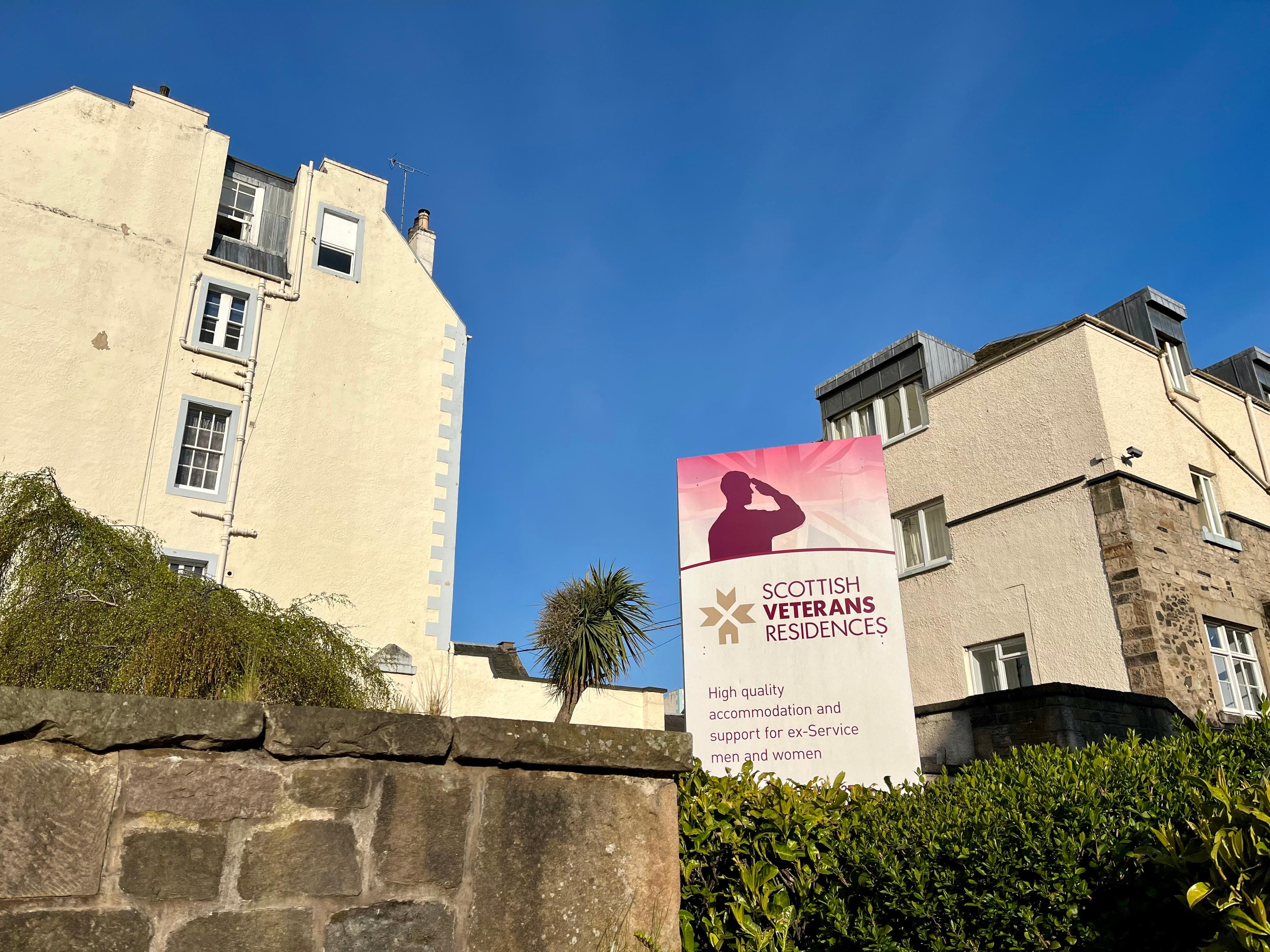

Photo courtesy of Scottish Veterans Residents
By Colin Leslie
- Lived experience
After spending hours, days and months below the sea in a submarine, UK Royal Navy veteran Dave was acclimatised to darkness and isolation. But when a cruel chain of events ended his Armed Forces career and relationship, the prospect of homelessness took him to the darkest place of all.
“I was facing eviction and it was a blow to my mental health,” said father-of-three Dave. “You find yourself trying to keep up pretences and I did that, pretty much until the day that I was made homeless.
“About two weeks before I was due to be evicted, I hadn’t told anyone what was going on. One day I spent 45 minutes at the doctors, crying, because the night before I’d thought about killing myself. I’d gone down and looked at a train going past and thought, ‘That looks like a good idea. I’ll go and stand in front of the train tomorrow.’ I googled other ways to end my life. Luckily, I woke up in the morning and phoned the doctors and got an appointment. I opened up to the GP and said that I wasn’t coping.”
Thankfully, the GP’s advice marked a turning point for the 45-year-old, who was medically discharged five days short of 12 years’ service with the Navy. The doctor’s intervention eventually led him to Scottish Veterans Residences (SVR), a charity providing supported housing for veterans who are experiencing homelessness.
SVR is Scotland’s oldest military charity, established in 1910. It provides a safety net each year for more than 200 male and female ex-Service personnel at three residences in Edinburgh, Dundee and Glasgow. While the majority of residents come from the British Army, Navy and Royal Air Force, the charity has helped veterans from across the world.
“I didn’t think it was what I needed, but it turned out to be the perfect place,” added Dave. “I consider myself really lucky compared to some, which might be a weird thing to say when you talk about homelessness, but at no point was I physically living on the streets. I was close, very close, because the car was already packed and I had nowhere to go, but then I was accepted by SVR.”
After leaving the military, Dave ideally needed a three-bedroom property so that his children could come to stay with him, and he also need space for his beloved black labrador.
Empathetic by nature, Dave focused on starting a new career in nursing, specialising in learning disability. He was accepted for university and had been doing bank shifts in a hospital as a care assistant. “Everything was okay at that point. I’d applied for housing with the local authority, but then I was abruptly informed there would be nothing available for me, even though I was a veteran. I was facing eviction. It’s really hard to end up in a situation where you’ve applied for help and had doors shut in your face.”
Dave arrived at SVR’s residence at Bellrock Close, Glasgow, but there was no quick fix to restore his confidence, mental health and longer-term housing prospects. It took time and commitment. “Looking back, when I moved into SVR I had not yet experienced rock bottom. I hit that a couple of weeks later,” he said.
“I was initially on a high because I’d got somewhere to live, but then severe depression kicked in. I went on a two-week drinking bender and didn’t leave my flat during the day at all. I slept on the sofa the whole time I was there because couldn’t settle in the room. It was a shock to the system. The staff would keep checking on me, but I was pushing people away.
“Then, one day I woke up and thought to myself. ‘This this isn’t going to help you see your kids again.’ From then on, I started looking at myself a bit more and then I started to feel hope again.
“My experience at SVR has been a positive one. Mark, my support worker, is a former military man himself, and was really good for me. He just kept chipping away and encouraging me. The whole team and their ethos has been brilliant - they have so much experience and understanding of working with veterans.
“I also benefitted from working with the occupational therapist and the therapeutic counsellor - they helped me turn it round.”
SVR provides a home to veterans for as long as they need it, but the goal is to support people back into civilian life and their own home.
After transitioning successfully, Dave now has his own flat, is volunteering at SVR and has a job lined up. He is, crucially, back close to his children. “I’m going to see my kids on Christmas Day this year, so that’s nice,” he said with pride.
His advice to others facing similar circumstances? “My advice to other veterans would be that there is help out there. People experiencing homelessness can feel invisible and ignored, but keep trying; at some point, someone’s going to listen. There is help. It’s just finding the right help.”
You can find out more at www.svronline.org