Inside Norway's wave of loneliness
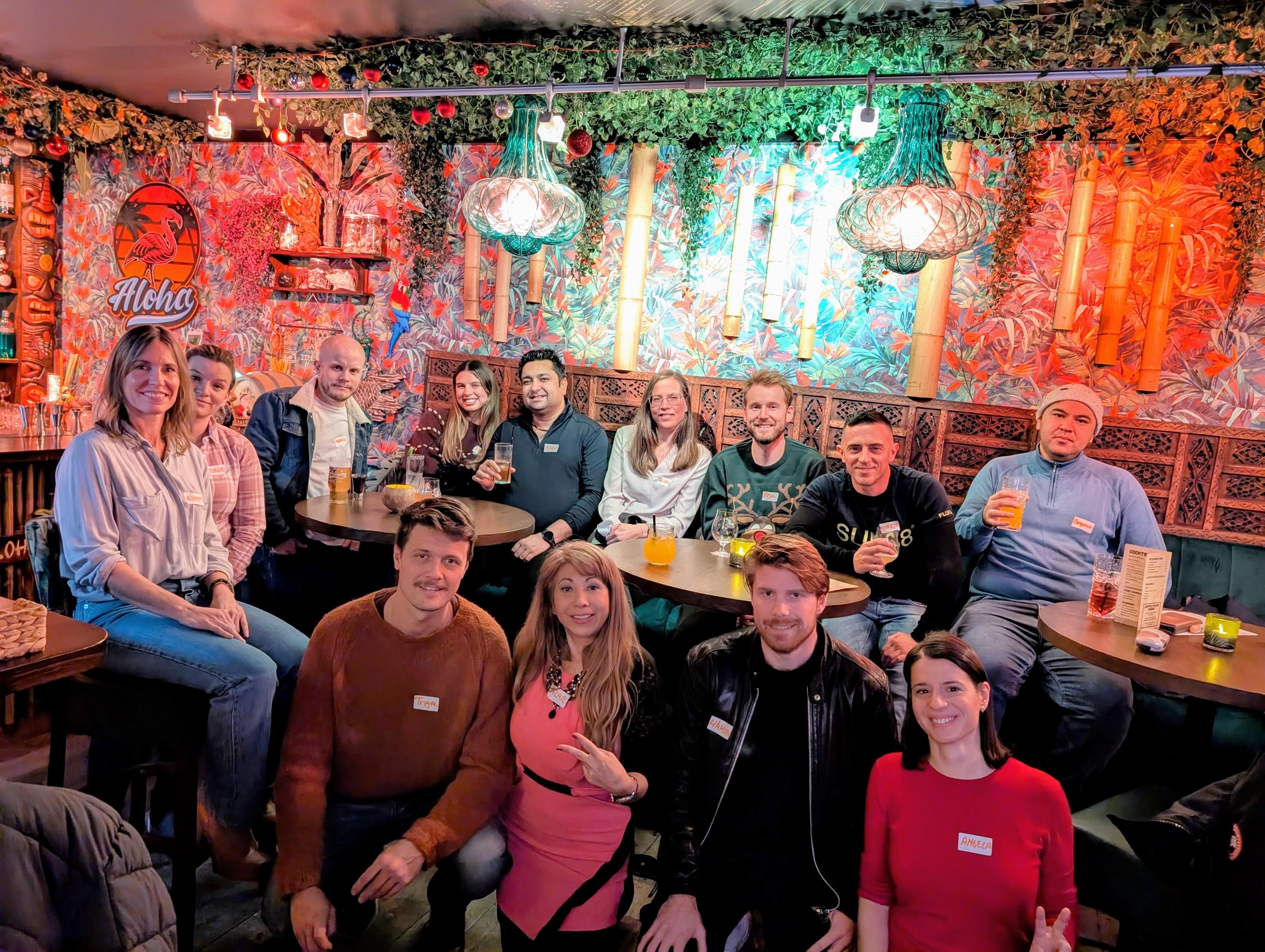

Photo by Ine Garvik
By Ine Garvik
- Lived experience

Loneliness has been a hot topic in recent years. It has been called a major public health problem and an epidemic. According to Statistics Norway’s Quality of Life Survey for 2025, 14.5 percent of Norwegians over the age of 18 state that, in the previous two weeks, they have been troubled by loneliness either quite a lot or a lot. If we include those who have been a little troubled by it, we are up to almost half the population. But what exactly is loneliness?
“We researchers usually define it as having too little or poor-quality social contact compared to what you would like,” says Thomas Hansen, a senior researcher at the Norwegian Institute of Public Health. So it’s not necessarily about being alone a lot; rather, it is more of a subjective experience.
“You can be lonely even if you have people around you. You can be lonely in a marriage, during lunch at work, or at a party, if you don’t feel included or seen,” Hansen explains.
Young people are the loneliest
For many years, it has been the elderly who have been the loneliest, whereas over the last 20 years, loneliness has increasingly become a problem for the younger generation. Even football hero and World Cup star Antonio Nusa (21) told the newspaper Aftenposten this summer that he has struggled with all-consuming loneliness.
The researcher does not believe it is a coincidence that increasing loneliness among younger people has coincided with the advent of social media. “Often you get very unrealistic expectations and an unrealistic picture of what is normal for everyone else. It can also cause you to feel restless and disturb your alone time, when you could actually be enjoying a good book,” says Hansen.
After the youngest, it is the very oldest (over 85) who top the statistics. According to Hansen, this is a matter of people living longer and getting sick later in life. As a result, problems have shifted in terms of age. Among other things, Statistics Norway’s survey also shows that the feeling of loneliness increases if you are out of work or in difficult financial circumstances.
Social prescribing
There are many easily accessible activities, whether you are young or old; whether you like to sit quietly, exercise or do hobbies; whether you’re interested in horses, gardening or handicraft. Nevertheless, those who would need it the most are often stuck at home.
“Many people who have severe and chronic loneliness also have other additional problems, such as anxiety, insecurity and trauma. If you have low self-esteem and you’ve been left out for a long time, it’s not so easy to just show up,” says Hansen. This is why he supports so-called social prescribing, which has yielded good results in other countries, including England.
In a nutshell, it means that a GP can refer patients struggling with loneliness to organisations such as the Red Cross or a volunteer centre. There, you will be connected with someone who will help you to find a meaningful activity suited to your interests. Not everyone wants to sing in a choir, and not everyone wants to go to a knitting café. Hansen also believes that the best thing is to get people into volunteering, not as recipients of help, but as givers. “Helping others is a better way of helping yourself,” he says.
If someone is reading this and is lonely, what would he advise them to do? “Try to take small steps in the relationships you have, whether they are with your neighbours, family or friends. Dare to reach out and indicate that you want more contact,” he says.
Asfalt talked to Andreas (18), Irfan (39), Preeti (48) and Tor (88) about loneliness and the importance of social contact. Andreas searched for lonely elderly people and didn’t understand why no one got in touch. Irfan cracked the Norwegian friend code. Preeti needed someone to say hello to. And Tor thinks it’s good to talk about feelings.
What does a 17-year-old do when bored on a family holiday? Put together a business plan that will facilitate intergenerational meetings, of course.
It was when his grandmother died last year that Andreas Gilje Stensland began to visit his grandfather more often. He had an inkling that it was lonely to suddenly be living alone after many years of marriage and family life. The two talked about all sorts of things, from school to everyday matters and little-known stories from the old days.
“I saw that his whole face lit up when he saw that it was me who had come to visit. Then I started to think about whether this was something others should also do more, preferably people who didn’t know each other already,” says Stensland when we meet him in the attic of his childhood home in Vardeneset.
It’s a warm Sunday evening at the end of June, he has just finished his second year of upper secondary school, and tomorrow he’s going on a trip with his friends to Split in Croatia. But first: interview with Asfalt.
In a camper van in Sweden
Let’s rewind to last summer. Last year, as in so many other summers, he was on a trip in the family’s camper van. There is a big group – some years up to 40 camper vans – who share this hobby and travel together year after year.
That year, Stensland felt he was caught between a rock and a hard place, neither adult nor child. The playground did not tempt the 17-year-old, so he sat in the van, on a campsite in Sweden, and mulled over this idea that had come to him: If you create a programme where young people who need work experience visit lonely older people, then you solve two major societal problems!
“I did a lot of research and spent several days reading about these things. I ended up in my own bubble; it was the only thing on my mind,” he says. It was only a few months after his grandmother had died, and it had been a tough period for the whole family.
“When summer came, it was like a fog had finally lifted. That's when the idea became clearer.” Since his grandmother had died of cancer, his first thought was that his goal in life would be to find the great cure for cancer.
“But then you have to be good at chemistry and things like that, and that’s not my strongest subject. So then I thought of something that could suit me and my strengths.” And so the Heartbeats project was born.
“Why doesn’t anyone get in touch?”
After a lot of research and fact-finding, the then-17-year-old sent an email to the Stavanger municipal authorities. They referred him to Stavanger Unlimited, which helps passionate people with ideas on how to solve social challenges and who want to start a business. There, he received a grant of 10,000 kroner (€932) to continue working on the idea.
“At first, I thought no one would pay to have someone visit, and it should be voluntary, but it was difficult to get young people to do volunteer work,” says Stensland. He asked his peers about what engages and motivates them to do a job.
“It was all about the money,” he says with a laugh. As a result, he changed the idea to be that young people get a part-time job, while elderly people or their relatives pay a small sum for one visit per week. At present, they have three regular visiting pairs. There is no shortage of interested young people, but mature adults are harder to find – he no longer calls them elderly, but mature adults.
“In the beginning, we went out and said that Heartbeats should be for lonely and active elderly people. There was no interest. I didn’t understand this. I thought, ‘We have a big problem here; I’ve read a lot of articles about it, and it’s been all over the media. Why doesn’t anyone get in touch?’”
He realised that “lonely” and “elderly” were two words that many people would not identify with. Now he is looking for mature adults who want to expand their network. They also offer help with small, practical things, such as shopping or attending a church service.
“It should be more welcoming and accessible,” he says, and he hopes that the autumn will bring more new enquiries. The plan is to start a non-profit organisation.
So he’s not doing this to get rich? “No, that’s not my goal. I want to be able to create the kind of good and fruitful relationships that my grandfather and I have had,” he says. And there is no shortage of ambition. Now he has taken courses in marketing, economics and management at school, which he gets to put into practice.
What will he do next year when he finishes secondary school? “I’m considering taking a gap year where I have a part-time job and focus on Heartbeats at the same time. If I can grow it enough, I can move to Bergen and study something practical at NHH, and hopefully set up a branch there as well.”
Leaving secondary school makes young people lonelier
“Since we’re speaking with a young person,” we ask, “why do you think it is that young people are the ones who feel the loneliest?”
“I think the period of partying when you finish secondary school plays a big role. Even in earlier school years, people start forming groups that define who you hang out with all the time. If you don’t have a group, it’s harder to be included. Then it’s easy to feel lonely,” says Stensland.
He himself is in a group of russ – a Norwegian term for secondary school leavers celebrating the end of school, usually on their own bus – but as a so-called “wandering russ”, i.e. without any vehicle. There are no russ buses at St. Olav’s, the school he attends. He says that at parties, people are often invited as groups rather than as individuals.
“My russ group has often invited people who are not in the group, because we know they’re not in any group, and that otherwise they’d be sitting at home without anyone to be with right now. But I don’t think most people think like that,” he says.
Even though he had a family that meant everything to him and studies he loved, Irfan Zia felt lonely because of a lack of community and of a sense of belonging.
A Pakistani family of four lives in a student residence in Bjergsted. Irfan Zia has just completed a master’s degree in international management. Now he has one year to get a full-time job before his visa expires. He isn’t stressed about that.
“I just have to trust that things will come to you when you need them. If I stress too much, I just become a worse job seeker and start to overthink things,” he says. He and his family have settled in here well now, but it didn’t happen by itself. At first, he felt very different.
“I had the best time with my family; we saw wonderful nature and all sorts of things. Even so, I lacked some kind of sense of belonging. You’re from a foreign culture, your food is different, your scent is different, your clothes are different. I noticed that people kept their distance from me,” he says, recalling about his early days in Stavanger.
Wanting to raise his children to become good citizens of the world
Zia grew up in Bahawalpur in the Punjab district of Pakistan, a city the size of Oslo. He studied IT and web design, and got a job in Lahore, Pakistan’s second largest city. He had long wanted to do an international master’s degree.
“We wanted to move abroad so that the children could learn in an international environment, learn from different cultures, see different religions, get an open mind and a good career, so that they would be well equipped to make a positive impact on the world. That was the idea behind it all,” he says. They chose Norway following a tip from a relative who had been there for a summer holiday. In the autumn of 2023, he and his wife, daughter (four) and son (six) got on a plane to Stavanger.
“I felt on top of the world as we got off the plane and saw the lush nature and felt the chill wind,” he says. At that time, he did not know that it is not only the Norwegian climate that is chilly, but also that Norwegians themselves can be perceived as a bit cold before they get to know you. He quickly learned that he had to initiate conversations himself.
“I could sit somewhere for a whole day without anyone talking to me. But if I tried to talk to them, then everyone would start chatting,” he says. He tried to make the most of freshers’ week, but also missed out on a lot owing to life with small children and the chaos of moving.
“If I have to give one piece of advice to other people: get involved as much as you can during that week. Don’t think about having to find a place to live or a job or anything; there will be time for that later. For that one week, you should dedicate everything to freshers’ week,” he says.
Misunderstandings and culture clashes
One of the first things he learned was that Norwegians like to plan. Well in advance.
“In my country, it’s different. It’s like, ‘Today I feel happy, so I’ll see if my friends want to hang out and do something.’ If you say yes to a party that’s in a month's time, you don’t know now whether you’ll feel like going to that party that day,” he says.
And in group work, there were misunderstandings. While he was used to doing reading together, here it was expected that he would have already done his reading when the group was to meet. “No one told me this; I would have prepared better otherwise. Instead, there were people who maybe judged me and thought that I didn't take things seriously,” he says.
Sometimes he asked if anyone wanted to come and get something to eat after a lecture, and they just said no without any explanation. “In Pakistan, it’s rude; it’s like, ‘Okay, he doesn’t like me.’ And the sense of humour was different; while I’m used to being able to crack a joke with, for example, people who work in the service sector, here you have to work harder to get beyond the surface.”
Another thing he learned was that in Norway, when someone gives you a compliment, you should ideally thank them and acknowledge it. “In Pakistan, you have to refuse for a while at first. If not, it will be seen as arrogant. Whereas here you just have to say, ‘Thank you,’ otherwise if you do it yourself, people doubt whether you are good at it. I’ve taught my wife that as well.”
Saved by raves
His entire first term was spent learning all the cultural codes, of which there were many. At the same time, he sat alone in the library or at home and thought about how to get his own group of friends. He started going to networking events at places like the local business association and networking group, which are focused on careers and international relations.
Eventually, things started to get easier, and a feeling of community began to blossom. For example, he has joined a group called Rogaland Ravers, who meet at techno events, dance and have fun together. “If I’m not there, someone will ask where I am. It feels good. I really love it. With techno and raves you can be yourself and you don’t have to follow specific dance steps, like with kizomba and bachata,” he says enthusiastically.
The family has also settled well into their new town. His son plays football, his daughter goes to kindergarten, and his wife works at the after-school programme and has made friends of her own. They make the most of nature and meet other families, with whom they cook. “My wife does what she loves, I do what I love, and the kids do what they love. All in all, the last year has been better than I could have ever imagined.”
Escaping loneliness is a lot about taking responsibility for your own health and not waiting for everyone else, says Preeti Agarwal.
As an entrepreneur living alone, Preeti Agarwal quickly got tired of sitting in her home office and not having anyone to meet at the coffee machine and to chat to over lunch. She has therefore suggested meeting at the Innoasis work community, which has meant a lot to her, and where she now has permanent office space.
“I came here because I was lonely and needed someone to say hello to me. It’s absolutely fundamental,” says the 48-year-old, who has a chat with everyone we meet, among them Tore Granstrøm, who has the title of Community & Event Manager at Nordic Edge, which runs Innoasis.
“The building is designed so that whether you want to get coffee, go to the toilet or go home, you have to walk past the common areas. It forces people to have random encounters and conversations,” he says. This goes down well with Agarwal, who missed having a more social workplace.
“The environment here is very good; I see it as an investment in my own health. You get to know people and get invited to things that those of us who are self-employed would otherwise watch other people have from the sidelines, such as Christmas parties and summer get-togethers. If you’re sitting by yourself at the lunch table, people will come and sit down,” she boasts, before ordering her regular coffee in the café and leading the way to a meeting room she has booked.
Anti-loneliness list
For many years, Agarwal has worked as a physiotherapist, and seven years ago, she started the company Positival, which is aimed at helping people on long-term sick leave to return to work. It has been just over three years since she came to Stavanger. She is originally from Oslo but has lived in more places than most: the Netherlands, Australia, South Africa, Finnmark, Hedmark, Trondheim and Bergen, to name but a few.
The first time she remembers feeling lonely was when she was 21 and going through a break-up. At that time, she decided to make a list of things she had to do. “It was a ‘brain dump’ of things; then I didn’t have time to be lonely, because I had so much to do. Finish writing that assignment, call that person and clean out the cupboard, just for starters,” she says.
Agarwal is keen to point out that you have to take responsibility for your own mental health and take the initiative yourself. When she moved to Stavanger, she posted an invite to an open event on Christmas Eve in a Facebook group with 25,000 members. Two people came.
“One had to see if it was real, what kind of person it was who would open their home to so many people. The other was someone who was going through a divorce and having a bit of a hard time,” she says. She believes it is important to do what you want regardless of whether you do it alone or with someone, whether it is opening a bottle of bubbly, going to a nice restaurant or attending a concert.
“I always meet someone I can talk to,” says the outgoing physiotherapist. Sometimes she goes to singles meet-ups, but it’s not to ‘fill a void’. “I’m not looking for someone who will ‘make me whole’; that’s the wrong starting point entirely,” she says.
People don’t take responsibility for each other
There are some days when it’s worse to be alone than others. For Agarwal, 17 May (Norway’s national day) and New Year’s Eve are the kind of days when “everyone”has plans with a group of friends. She remembers one May during her master’s degree when she was doing an internship at a clinic with 13 other physiotherapists. It was in a city she had just moved to, and she didn't know anyone.
“Around the lunch table, everyone was talking about what they were going to do on 17 May, and I made pretty clear that I had no plans. Despite that, none of my colleagues invited me in any way whatsoever. I think it’s a bit odd; not sad exactly, but I was a little surprised. They could have said that they had some family stuff in the morning, but feel free to meet us in town afterwards, or something like that. People don’t take that responsibility for each other,” she says.
Instead of giving up and staying at home, she asked around a bit more, and with an acquaintance joined an event for international immigrants. There, she met several people with whom she became friends. “I’m still in contact with some of them, several years later.”
Stories from strangers
Agarwal also shared a story from when she lived in Brisbane, Australia. “I was eating out at a packed restaurant with two friends. Someone is sitting alone next to us. Suddenly, one of my friends, without consulting the rest of us, asks him if he wants company and would like to sit with us. He just took the initiative completely spontaneously; I think it was absolutely fantastic. He sat down with us, we got to know each other, and we found out that he worked with medical equipment on the Gold Coast and such.”
This has inspired her several times in life since, such as when she lived in Røros and got into conversation with a woman who turned out to be an American film producer, and with whom she is still in touch on Facebook.
Or when she lived in Nordland and asked an elderly man at a bakery if he would like to sit with her. “He told me that he was waiting for the ferry home to Lofoten, and I got to hear about when he was a little boy during the war. His mother used to give food to the one poor German soldier who was stationed on the island where they lived,” she says enthusiastically.
She is grateful for her friend in Brisbane who gave her a new perspective on how to meet the people around us. “We are so much the type to overthink. How scary can people be, really?”
It has been a year and a half since Tor Fjelde became a widower. It is still hard to believe that his wife will never come back.
Tor Fjelde opens the door to his flat in Gjerdebakken at Tasta and invites Anders Leon Andersen inside. From the living room window on the fourth floor, the pensioner has a great view of Lake Stokkavatnet, and from the spacious terrace he can enjoy the afternoon sun alongside large flowering potted plants.
On a small table stands Tor and Elsa’s wedding photo, and a separate picture of Elsa. A candle burns between the pictures. Every morning, Tor Fjelde relights the candle, a beautiful ritual that gives him peace of mind and brings back good memories.
From detached house to flat
The eldest of three siblings, Fjelde grew up in a flat in the Bank of Norway building in central Stavanger, where his father was a caretaker. He has a clear memory of his father lighting the stove with shredded banknotes.
He met Elsa for the first time at Økonoms kafé in May 1959. They got engaged in December of the same year. On 1 December 1962, they got married, and they had 62 wonderful years together.
It has been four years since he and his wife decided to move from their house in Madlatuå, where they had lived for 60 years.
“We had a fantastic time at Madlatuå, but after a while, we thought that the house was a bit too big for the two of us. The fact that our three daughters also encouraged us to sell contributed to our decision to move,” says Fjelde.
Not long after they moved in, Elsa’s health began to fail. Osteoporosis, cancer of the spinal cord and incipient dementia made the days heavy and difficult. She spent three months at Haugåstun nursing home before she eventually got a permanent place at the nursing home in Tasta.
“I visited her every day, sometimes several times a day. I was told to take it easy. They didn’t want two patients in the nursing home.”
Missing neighbourliness
The time in the new flat has not been wholly positive. “I regret a little that we moved. I miss the garden and the contact with our neighbours. We didn’t have much contact, but we’d often have a chat over the garden fence. It is much harder to meet people here; it can be a nod down in the garage, or a ‘hello’ in the stairwell.”
Fjelde has three daughters, grandchildren and great-grandchildren. They often invite him for dinner and cabin trips. He also has other relatives and good friends. He has a lot of regular, enjoyable activities during the week, so he doesn’t want to call himself lonely.
"It happened quickly with Elsa towards the end, and she died a year and a half ago. It still feels hard to believe that she is gone.”
It’s not often that the doorbell rings now, except for kids who want empty bottles for some club activity or other. Initially, lots of people stopped by. “How’s it going?” was the usual question. “Yes, it’s fine.” But it would have been nice if more people had got in touch.
Naturally, it was a huge change from being a couple to being alone, but Fjelde had a soft transition since Elsa had been in a nursing home in her final days. “I was used to doing the housework and the cooking, but I struggled more with the laundry,” he laughs.
Talking to himself
What has been the hardest thing since he’s been alone? “The enormous emptiness. I couldn’t read and collect my thoughts at first. There was no one to talk to, so I started talking to myself. I would say: ‘Elsa, where’s the grater?’ but I would suddenly realise that she wasn’t there anymore. But I found it in the end.”
Being active and getting out among people has been Tor’s way of coping with the grief and loss. He works out in an exercise group called Strong and Steady once a week. Every Friday, he is at Tasta Community Centre and sings in Sing With Us, where various Stavanger artists bring lyrics and lead a sing-along. He regularly attends the retiree groups of Stavanger Aftenblad newspaper, where he was employed for over 47 years, and of the Graphics Club. This summer, he went to Crete with the in-laws of one of his daughters, and this autumn he will go to Solgården resort in Spain. Three times a week, he eats dinner in the café at Tasta nursing home. Here, he has found many new, good friends.
For many years, Tor and Elsa had a cabin at Kvinesheia. It was lovely to spend weekends and holidays there.
Their great-granddaughter Ingrid developed a special relationship with Elsa before she died. She often visited and got to experience all the unusual things that her great-grandmother did because of dementia. There were so many good and powerful stories that Ingrid’s father, Fredrik Fornes, wrote the book Super-Great-Grandmother Goes to the Stars, which has been well received by the public. Incidentally, it is Fredrik who has now taken over the family cabin in Kvinesheia.
“Don’t isolate yourself”
Fjelde is a sociable and outgoing man who likes to talk to people. He has been the toastmaster for hundreds of weddings and anniversaries. Does he have any advice for older people who feel lonely and alone?
“Don’t isolate yourself and don't be afraid to meet new people. It’s you who have to take the initiative to have a good and meaningful life. I quite enjoy taking the bus into town without any particular reason. I often meet someone I know and have a positive experience.”
What about a new partner in the autumn of life? “That hasn’t crossed my mind at all. At the restaurant Al Forno in Tasta, there are some ladies I’m on a first-name basis with, but I’ve never asked if I could walk them home, as we used to do back in the day. What will be, will be,” he smiles.
Looking back, when was the best time in his life? “When the children were small, before they started school. We had a lot of fun together as a family in those days.”
What is it like for men his age to talk about their feelings and other difficult things? “I can only speak for myself, and I think it’s good to talk about feelings, often with strangers. I sometimes have visits from nurses who help me with medication. They are good conversation partners, and we don’t just talk about Elsa; I often need to talk about myself as well,”
And what does he think about death? “The only certainty in life is that we’re going to die, but I don’t think about it much. I don’t believe in life after death, but when the time comes, I hope it goes smoothly, without too much pain or fuss.”